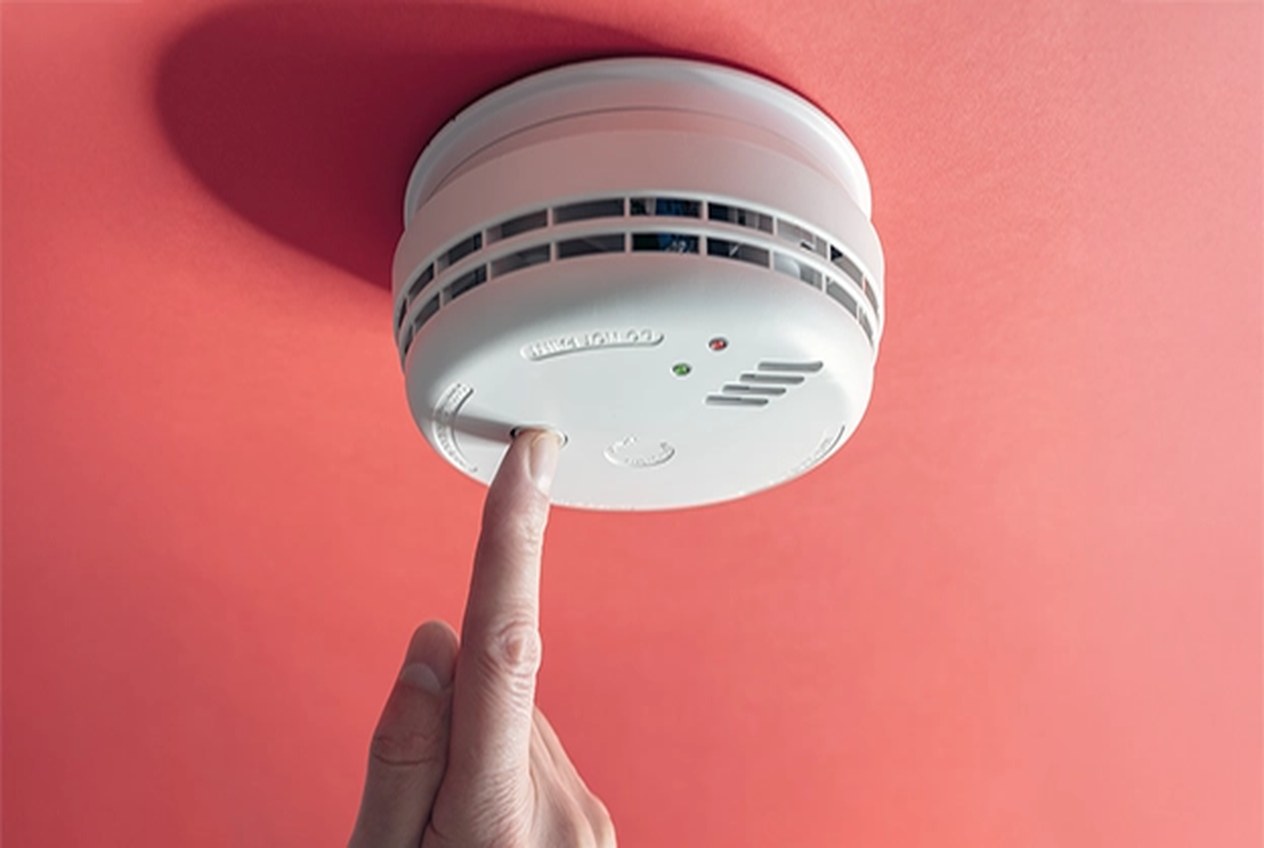
Smoke alarms are the cheapest life-saving device in a home, and the easiest thing to forget. They rarely fail loudly. They fail quietly — a dead battery, a dusty sensor, an alarm placed where smoke never reaches until it is too late.
Fire safety at home is not complicated, but it is specific. It depends on where alarms sit, whether they are interconnected, whether everyone can hear them, and whether the household has ever actually practised leaving. Work through the points below once, and you will be ahead of most homes on the street.
Placement matters more than quantity
An alarm in the wrong place creates false confidence. Smoke rises, so detection belongs on the ceiling or high on a wall, away from dead-air pockets near corners where air barely moves. Keep alarms away from the immediate zone above a cooker or a bathroom door, where steam and cooking smoke will trigger nuisance alerts and teach everyone to ignore the noise.
As a practical rule, plan detection in every space where someone sleeps, in the corridor that serves those bedrooms, and on every level of the home including basements and loft conversions. Stairwells deserve attention because smoke moving vertically can cut off the exit route people rely on.
Where alarms belong in a home
- Inside each bedroom, so sleeping occupants are warned where they are.
- In hallways and landings, between bedrooms and the way out.
- On every floor, including basements and converted lofts.
- In living areas, at a sensible distance from fireplaces and heaters.
- Near, but not over, kitchens, and away from bathrooms and steam.
- In utility rooms, where appliances and charging devices gather.
Interconnected alarms and smart notifications
Individual alarms are better than nothing, but interconnected alarms are dramatically better. When one detects smoke, they all sound — so a fire in the basement wakes the person sleeping on the top floor. If you are replacing or extending a system, interconnection is the feature worth prioritising.
Smart alarms that send a notification to your phone add another layer. They are helpful if someone is hard of hearing, if the house is large, or if you want visibility while you are away. Remember, though, that notifications depend on power and connectivity: the audible alarm in the room must still do its job on its own.
Build a testing habit that actually happens
Choose a date that is easy to remember — the start of a season, a birthday, a bill arriving — and test every alarm. Press the test button, listen for the full sound, and note any unit that hesitates. Dust or vacuum the sensor areas gently and check the manufacturer's guidance for your model.
Replace batteries according to the product instructions, and replace sealed-unit alarms at the end of their stated service life. Alarms do not last forever; sensors age and become slower to respond. Write the install date on the back of each unit so you never have to guess.
A quick audit you can do today
Walk the house and count the alarms. Are there any bedrooms without one? Does the alarm on the top landing sound as loudly in the bedroom as the one beside the bed? Can you hear it with the door closed and the shower running? Fix the gaps first.
Extinguishers, blankets and the kitchen
Most home fires begin in the kitchen, and most are small when they are noticed. A fire blanket near the hob and an appropriately rated extinguisher within reach, but not so close that you would have to reach past flames to use it, are sensible additions. Learn how to use them before you need them, and know which fires should simply prompt you to leave.
Never store extinguishers in a cupboard behind a stack of pans. If nobody can reach it without moving furniture, it is decoration rather than protection.
Practise the route out
Every household member should be able to answer two questions without hesitating: where is the nearest clear way out, and where do we meet once outside? Walk the route with children, talk through what to do if the hallway is smoky, and agree that nobody returns inside for belongings.
Check that exits actually open easily. A back door that swells in damp weather, a window painted shut or a garage full of stored boxes are all quiet liabilities, and all easy to fix.
When to replace rather than repair
If an alarm has been through a fire, has been painted over, has a damaged cable, is over its service life, or chirps despite a fresh battery, replace it. Do not silence a fault and hope. The same applies after a major renovation, when dust and disturbance may have affected detectors that were only just installed.
Fold safety into your wider renovation
If you are already opening walls for wiring, adding a bathroom or finishing a basement, that is the moment to install detection and carbon monoxide alarms properly and neatly, with mains power where appropriate. It is also the moment to check that escape routes have not been blocked by new cabinetry or a new layout.
Doing safety work alongside a renovation costs far less than doing it afterwards. And once it is done, keep the testing habit — that is what turns equipment into protection.