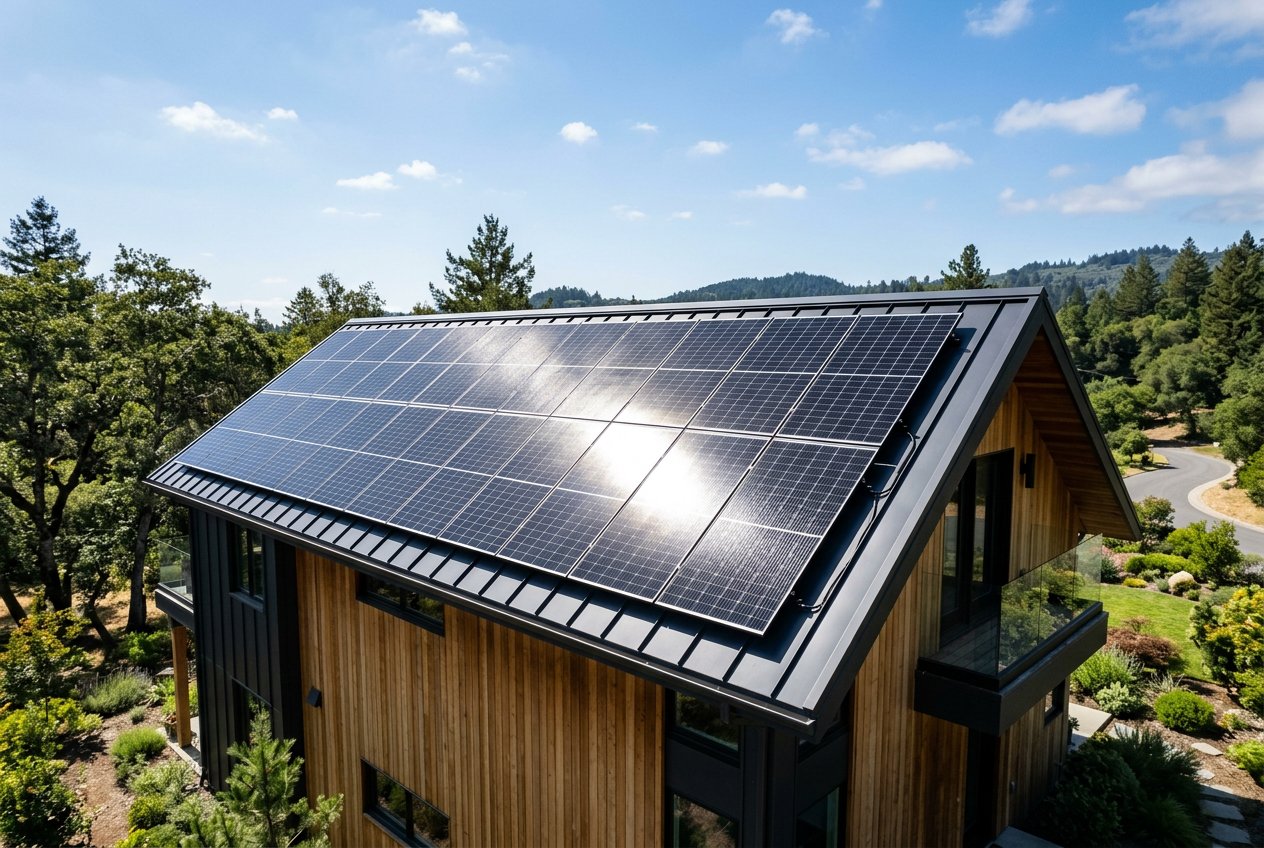
Solar is one of the few home upgrades that keeps paying you back, but the order in which you do things matters enormously. Panels installed before a roof replacement, or before shade trees are assessed, are an expensive mistake you only get to make once.
Most solar disappointments we see are not equipment failures. They are planning failures: the array faces the wrong way, a chimney casts a shadow across the middle of the afternoon, or the roof under the panels was already near the end of its life. Here is how to think it through calmly.
Start with the roof, not the panels
Solar panels are expected to last a very long time. Your roof may not. Before anything is mounted, have the roof inspected for age, remaining life, flashing condition, decking integrity and ventilation. If the roof is close to replacement, replace it first — removing and reinstalling an array to fix a roof underneath is a costly and avoidable exercise.
This is also the moment to confirm the structure can take the additional load and to check how the mounting will be sealed. Penetrations done properly last decades. Penetrations done casually leak within a season or two.
Shade is the quiet dealbreaker
A single shaded panel can drag down the performance of the panels wired with it. Map the sun across the day and across seasons, not just at noon in summer. Chimneys, dormers, satellite dishes and the neighbour's growing oak all matter. If trimming is an option, plan it before installation rather than after.
Where shade is unavoidable, ask about panel-level optimisation or micro-inverters, which reduce the penalty of a partly shaded array. Roof orientation and pitch also shape expectations: a well-oriented roof simply produces more than one facing the wrong way, and no amount of premium equipment changes that.
Understand your own energy habits first
Look at a full year of electricity use before choosing a system size. A household that is out all day and home in the evening has a different profile from one where someone works from home with the heating or cooling running. The right design responds to when you use power, not only how much.
This is also the point to attack waste. Insulation, draught sealing and window upgrades often deliver savings at a lower cost than extra panels. Doing efficiency work first means you can size the array smaller and still meet your needs.
Sequence your upgrades sensibly
If several projects are on your list, an order such as this usually serves homeowners best:
- Roof inspection and replacement if needed
- Insulation, draught proofing and ventilation improvements
- Window replacement where comfort and heat loss are real problems
- Solar design and installation last, sized to the improved home
Doing it in this order avoids paying twice for access work and gives you a clearer picture of what the house actually needs from an energy system.
Inverters, batteries and the paperwork
The inverter is the working heart of the system and the part most likely to need attention first. Ask about its expected service life, its warranty terms and where it will be mounted — a cool, ventilated position matters.
Batteries are worth considering if evening use is high or if outages are a concern, but they are not automatically the right choice. Model the numbers honestly with your installer instead of buying storage on enthusiasm alone.
Paperwork matters too. Permits, utility interconnection approval, inspection sign-off and warranty registration all need to be completed by someone. Confirm in writing who is responsible for each, and keep copies with your home documents. If financing is involved, read the terms carefully and make sure the warranty travels with the equipment rather than the person who signed.
Ask before you sign
Who handles permits and utility approval? What happens to the warranty if we sell the house? How will snow and debris be managed on the array? What is excluded from the performance estimate?
Choosing and vetting an installer
Ask for licensing and insurance details, and check them. Request references from installations similar to yours, ideally in the same climate. Look for a company that will send someone to inspect the roof in person rather than quoting purely from satellite imagery — the details that decide whether water gets in are only visible up close.
Be cautious of anyone who discourages a roof inspection, promises a specific percentage saving without seeing a bill, or pressures you into signing on the day. A good installer is comfortable with you taking a week to read the documents.
After installation
Know how to read your monitoring dashboard, and check it occasionally so that a quiet fault is noticed before an entire season passes. Keep the panels reasonably clean, avoid unnecessary shading from new planting, and note any roof work you plan later so the array can be handled safely.
Solar works best as part of a wider home plan: a sound roof, sensible insulation, efficient windows and an honest assessment of how you use energy. Get those in line and the panels will do their job quietly for a very long time.